Commercial Law League of America
Western Region Conference
Thursday & Friday, September 17-18, 2026
Sheraton Universal Hotel
Universal City, CA

Commercial Law League of America
Western Region Conference
Thursday & Friday, September 17-18, 2026
Sheraton Universal Hotel
Universal City, CA
Presentations & Handouts
Friday, September 18, 2026


Speaker:
Regina M. Slowey, President & CEO, Barron & Newburger, PC, Auburn Hills, MI
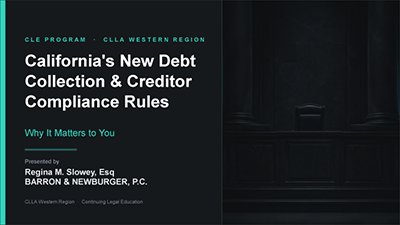
Bankruptcy significantly impacts commercial collections, influencing processes from foreclosures to judgments. When a individuals and businesses file for bankruptcy, it triggers an automatic stay, halting collection actions against the debtor. Creditors must navigate this complex landscape, understanding the different bankruptcy chapters and their implications. We will discuss circumstances in which court have found that collection agencies violate the automatic stay and the repercussions for doing so. We will also discuss the recent case of Ryniker v. Sumec Textile Co., No. 24-2090 (2d Cir. 2026), in which a bankruptcy court determined that service of a preference complaint on a U.S. collection agency was valid service on its client, a Chinese company, even though the collection agency was not specifically authorized to accept service of the complaint. This presentation will also discuss strategies that collection agencies can use to avoid problems and to maximize the recoveries of their claims against bankrupt debtors.
Speaker:
This session bridges the gap between legal theory and practical recovery, making it essential for new attorneys building their litigation toolkit, experienced practitioners refining their collection tactics, and collection agency professionals seeking to optimize recovery rates for their clients.
Gary and John will break down the primary legal mechanisms available for enforcement, including wage garnishments, bank levies, and real property liens. Attendees will gain a step-by-step roadmap for executing each alternative, mapping out everything from initial asset discovery to filing the necessary writs. Whether you are seeking to streamline your firm’s collection process or protect a client’s bottom line, this presentation delivers the actionable insights needed to turn a paper judgment into actual recovery.
Speakers:
John S. Carter, Associate Managing Attorney, Law Offices of Gary A. Bemis, Riverside, CA

1. The Real-World Practicalities of Levying
Securing the writ is only half the battle; executing it is where the real friction occurs. You can add significant value by sharing the operational realities of dealing with enforcement:
- The Sheriff Bottleneck: In many jurisdictions (especially across California counties), local sheriff civil units are understaffed, slow, or have highly specific, rigid local rules regarding instructions, fees, and scheduling a levy.
- The “Private Eye” Advantage: Emphasize the absolute necessity of pre-application asset searches. A writ is useless if the levying officer arrives at an empty warehouse. Discussing how to deploy private investigators or specialized databases to pinpoint exact bank account numbers, equipment locations, or inventory shifts before filing ensures the remedy hits its mark.
- Sister-State Prejudgment Enforcement: What happens when the contract dispute is filed in one state, but the debtor’s primary inventory or equipment is sitting in another (like New Mexico, Texas, or Arizona)?
- Tactical Coordination: How to simultaneously orchestrate a local litigation strategy while using local counsel or specialized collection networks in surrounding states to secure emergency relief before the assets disappear across state lines.
- The 90-Day Preference Window: If you successfully attach assets or secure a lien prejudgment, but the debtor files bankruptcy within 90 days, you face a preference lookback.
- The “Secret Weapon” of the Prejudgment Lien: On the flip side, if you successfully execute a prejudgment writ of attachment outside the 90-day preference window, that provisional lien can elevate your client from a completely unsecured trade creditor to a secured creditor in the bankruptcy estate. This completely changes your leverage in subsequent restructuring negotiations.
- Weaponizing the Bond Amount: In jurisdictions like California, the statutory minimum bond is often low (e.g., $10,000), but a sophisticated defense attorney will aggressively argue to hike the bond to a massive sum by claiming the attachment will paralyze their business or halt an impending corporate transaction.
- The Malpractice Trap: It’s worth reminding the room of the draconian consequences of a wrongful attachment claim. If the creditor loses the underlying case after tying up the debtor’s assets, the damages can easily exceed the original debt, turning an aggressive collection action into a defensive nightmare for the client.
A Quick Tip on the CA Landscape: Since the seminar is in California, a great practical crowd-pleaser to mention is the Temporary Protective Order (TPO) under Cal. CCP § 486.010. It’s an incredibly effective, less-utilized intermediate step that preserves the status quo by creating an immediate lien on the debtor’s property while the full, noticed Writ of Attachment application is pending, without having to meet the incredibly high bar of a standard emergency ex parte seizure.
Speaker:
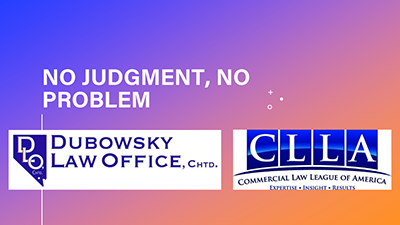
Join this fast-moving, interactive program designed for collection attorneys and collection agencies nationwide. Using a team-based, survey-answer game format, participants will compete through real- world collection scenarios involving FDCPA compliance, California Rosenthal Act spillover issues for California-based accounts, unauthorized practice of law concerns, communications with represented parties, settlement authority, privacy and data security, and litigation conduct that can reduce exposure to counterclaims and sanctions.
This is not another lecture-heavy compliance program. Participants will test their instincts, compare answers with other collection professionals, and learn practical ways to spot and manage risk from the first demand letter through litigation and resolution. While the program focuses primarily on broadly applicable ethics and risk-management principles, it will also flag California-specific issues that attorneys and agencies should recognize when handling California-based claims, accounts, or debtors.
Speaker:
Presentations & Handouts
Friday, September 18, 2026
Speaker:
Regina M. Slowey, President & CEO, Barron & Newburger, PC, Auburn Hills, MI
Bankruptcy significantly impacts commercial collections, influencing processes from foreclosures to judgments. When a individuals and businesses file for bankruptcy, it triggers an automatic stay, halting collection actions against the debtor. Creditors must navigate this complex landscape, understanding the different bankruptcy chapters and their implications. We will discuss circumstances in which court have found that collection agencies violate the automatic stay and the repercussions for doing so. We will also discuss the recent case of Ryniker v. Sumec Textile Co., No. 24-2090 (2d Cir. 2026), in which a bankruptcy court determined that service of a preference complaint on a U.S. collection agency was valid service on its client, a Chinese company, even though the collection agency was not specifically authorized to accept service of the complaint. This presentation will also discuss strategies that collection agencies can use to avoid problems and to maximize the recoveries of their claims against bankrupt debtors.
Speaker:
This session bridges the gap between legal theory and practical recovery, making it essential for new attorneys building their litigation toolkit, experienced practitioners refining their collection tactics, and collection agency professionals seeking to optimize recovery rates for their clients.
Gary and John will break down the primary legal mechanisms available for enforcement, including wage garnishments, bank levies, and real property liens. Attendees will gain a step-by-step roadmap for executing each alternative, mapping out everything from initial asset discovery to filing the necessary writs. Whether you are seeking to streamline your firm’s collection process or protect a client’s bottom line, this presentation delivers the actionable insights needed to turn a paper judgment into actual recovery.
Speakers:
John S. Carter, Associate Managing Attorney, Law Offices of Gary A. Bemis, Riverside, CA
1. The Real-World Practicalities of Levying
Securing the writ is only half the battle; executing it is where the real friction occurs. You can add significant value by sharing the operational realities of dealing with enforcement:
- The Sheriff Bottleneck: In many jurisdictions (especially across California counties), local sheriff civil units are understaffed, slow, or have highly specific, rigid local rules regarding instructions, fees, and scheduling a levy.
- The “Private Eye” Advantage: Emphasize the absolute necessity of pre-application asset searches. A writ is useless if the levying officer arrives at an empty warehouse. Discussing how to deploy private investigators or specialized databases to pinpoint exact bank account numbers, equipment locations, or inventory shifts before filing ensures the remedy hits its mark.
- Sister-State Prejudgment Enforcement: What happens when the contract dispute is filed in one state, but the debtor’s primary inventory or equipment is sitting in another (like New Mexico, Texas, or Arizona)?
- Tactical Coordination: How to simultaneously orchestrate a local litigation strategy while using local counsel or specialized collection networks in surrounding states to secure emergency relief before the assets disappear across state lines.
- The 90-Day Preference Window: If you successfully attach assets or secure a lien prejudgment, but the debtor files bankruptcy within 90 days, you face a preference lookback.
- The “Secret Weapon” of the Prejudgment Lien: On the flip side, if you successfully execute a prejudgment writ of attachment outside the 90-day preference window, that provisional lien can elevate your client from a completely unsecured trade creditor to a secured creditor in the bankruptcy estate. This completely changes your leverage in subsequent restructuring negotiations.
- Weaponizing the Bond Amount: In jurisdictions like California, the statutory minimum bond is often low (e.g., $10,000), but a sophisticated defense attorney will aggressively argue to hike the bond to a massive sum by claiming the attachment will paralyze their business or halt an impending corporate transaction.
- The Malpractice Trap: It’s worth reminding the room of the draconian consequences of a wrongful attachment claim. If the creditor loses the underlying case after tying up the debtor’s assets, the damages can easily exceed the original debt, turning an aggressive collection action into a defensive nightmare for the client.
A Quick Tip on the CA Landscape: Since the seminar is in California, a great practical crowd-pleaser to mention is the Temporary Protective Order (TPO) under Cal. CCP § 486.010. It’s an incredibly effective, less-utilized intermediate step that preserves the status quo by creating an immediate lien on the debtor’s property while the full, noticed Writ of Attachment application is pending, without having to meet the incredibly high bar of a standard emergency ex parte seizure.
Speaker:
Join this fast-moving, interactive program designed for collection attorneys and collection agencies nationwide. Using a team-based, survey-answer game format, participants will compete through real- world collection scenarios involving FDCPA compliance, California Rosenthal Act spillover issues for California-based accounts, unauthorized practice of law concerns, communications with represented parties, settlement authority, privacy and data security, and litigation conduct that can reduce exposure to counterclaims and sanctions.
This is not another lecture-heavy compliance program. Participants will test their instincts, compare answers with other collection professionals, and learn practical ways to spot and manage risk from the first demand letter through litigation and resolution. While the program focuses primarily on broadly applicable ethics and risk-management principles, it will also flag California-specific issues that attorneys and agencies should recognize when handling California-based claims, accounts, or debtors.
Speaker:
Copyright © 2026 Commercial Law League of America I Privacy Policy I Contact Us